
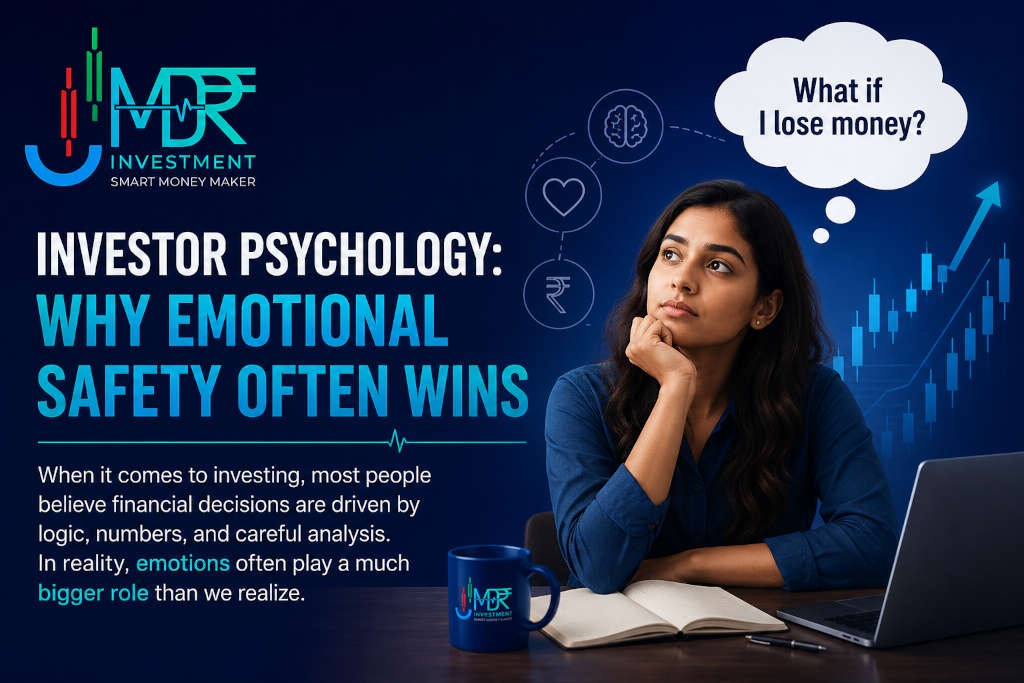
When it comes to investing, most people believe financial decisions are driven by logic, numbers, and careful analysis. In reality, emotions often play a much bigger role than we realize.
Consider the story of Anjali.
Anjali wanted to invest for her long-term financial needs. She understood the importance of wealth building and knew that a diversified investment portfolio could help her achieve those needs over time.
Her financial guide explained the benefits clearly. The strategy made sense. The numbers were convincing.
Yet, she hesitated.
Her concern wasn't about potential returns.
Her concern was simple:
"What if I lose money?"
This reaction is more common than many investors think.
The Emotional Side of Investing
Most investors understand the impact of inflation and the need for growth-oriented investments. They know that keeping all their money in traditionally "safe" options may not always help them achieve long-term financial needs.
However, when faced with uncertainty, many still gravitate toward choices that provide emotional comfort rather than optimal financial outcomes.
Why does this happen?
Because the fear of loss feels immediate and real.
On the other hand, the benefits of long-term investing often seem distant and uncertain.
When emotions and logic compete, emotions frequently take the lead.
Our Need for Certainty
Human beings naturally seek certainty.
Knowing exactly what will happen provides comfort and peace of mind. Investments that offer predictable outcomes often feel safer, even if they may not generate sufficient growth over the long run.
Conversely, market-linked investments involve fluctuations and uncertainty. While these fluctuations are a normal part of wealth building, they can create anxiety and fear, causing investors to delay or avoid important financial decisions.
Understanding Investor Behaviour
Behavioural finance studies how psychological factors influence financial decisions.
One of its most important insights is:
Investors do not always choose what is financially optimal. They often choose what feels emotionally comfortable.
This doesn't mean investors are irrational. It simply means that emotions such as fear, anxiety, and uncertainty are powerful influences on decision-making.
Recognizing these emotions is the first step toward making better investment choices.
The Role of a Financial Guide
A financial guide's role extends far beyond recommending investment products.
A good guide helps investors:
-
Understand the emotions driving their decisions
-
Stay focused on long-term financial needs
-
Avoid reacting impulsively to short-term market movements
-
Build confidence during periods of uncertainty
-
Create a disciplined and need-oriented investment approach
Often, successful investing is not about finding the perfect investment. It is about developing the right mindset and maintaining discipline over time.
Conclusion
What feels safe today may not always create financial security tomorrow.
While emotional comfort is important, long-term financial success often requires balancing emotions with rational decision-making.
Understanding investor psychology can help individuals make more informed choices, stay committed to their financial needs, and build lasting wealth over time.